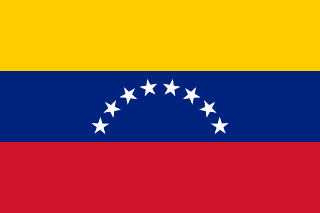
Discover
The identity of the nation
Venezuela is a country of deep contrasts. It holds one of the largest oil reserves in the world, yet is currently living through one of the worst economic crises in recent Latin American history. Hyperinflation, shortages of food and medicine, and political instability have driven millions of Venezuelans to leave the country in recent years, creating one of the largest waves of forced migration in the world today. At the same time, the Venezuelan people are known for their joy, hospitality and a faith that endures even amid suffering.
Most of the population identifies as Christian, a legacy of the Catholic evangelization that began back in the 16th century, when Franciscan and Dominican friars arrived alongside the Spanish colonizers. But Christian faith in Venezuela also has a more recent and vibrant side: since the arrival of the first Pentecostal groups in the early 20th century, the number of evangelicals has grown steadily, and from 2018 onward, amid the worsening crisis, that growth accelerated even further. Many Venezuelans report having drawn closer to God precisely because of the pain and uncertainty of daily life.
Alongside Christian faith, the cult of María Lionza remains very strong in popular culture, a blend of indigenous, African and Catholic beliefs that attracts followers seeking protection and spiritual power outside of Christ. This syncretism, the blending of different religious beliefs into a single practice, exists side by side with evangelical and Catholic churches, and reveals the spiritual thirst of a people searching for answers amid instability.
In the country’s most remote regions, such as the Orinoco Delta, the Amazon rainforest and the Gran Sabana in the southeast, dozens of indigenous peoples still live, some of whom have had almost no contact with the gospel. Peoples such as the Cuiba and the Chaima preserve their ancestral beliefs and live in isolation, often without a local church, without the Bible in their own language and without anyone to speak to them clearly about Jesus.
The crisis has also changed the face of the Venezuelan church: today, millions of believers live scattered across Colombia, Peru, Brazil and other countries, carrying their faith with them and often starting new Christian communities wherever they settle. Venezuela, which once received the gospel from abroad, now also exports it through its own diaspora, the name given to a people living scattered outside their homeland, even amid the pain of separation and distance from home.
- Carib, Arawak and other indigenous peoples have inhabited Venezuelan territory for thousands of years before the arrival of Europeans.
- 1498 Christopher Columbus reaches the coast of Venezuela on his third voyage, one of the first European contacts with the South American continent.
- 1567 Founding of Caracas, the city that would later become the country's capital.
- 16th-18th centuries Spanish colonization, with the Catholic evangelization of indigenous peoples led by Franciscan and Dominican friars.
- 1811 First declaration of independence, still unstable and short lived.
- 1821 Independence is consolidated after victory at the Battle of Carabobo.
- 1830 Venezuela separates from Gran Colombia and becomes a fully independent country.
- Early 20th century The discovery of large oil reserves transforms the country's economy.
- 1919 Arrival of the first Pentecostal groups, marking the start of evangelical growth in the country.
- Recent decades A severe economic and political crisis triggers the largest wave of migration in recent Latin American history.
- Today Despite the crisis, the evangelical church continues to grow, and Venezuelans scattered around the world carry their faith to other countries.
-
SpanishOfficial language, spoken by nearly the entire population.
-
WayuunaikiLanguage of the Wayuu people, the country's largest indigenous group, spoken mainly in the northwest, near the border with Colombia.
-
WaraoLanguage isolate (with no clear relation to other languages) spoken by the Warao people, in the Orinoco Delta.
-
PemónA Cariban language spoken by the Pemón people, in the southeast of the country, near Mount Roraima.
-
Other indigenous languagesThe Constitution recognizes about 40 indigenous languages as official, spoken by dozens of native peoples throughout the territory.
Venezuela lies in the north of South America, bordered by the Caribbean Sea. The territory is divided into four major regions: the lowlands around Lake Maracaibo, in the northwest; the Andes mountain range, which crosses the west of the country and rises to more than 5,000 meters; the llanos, the vast grazing plains that cover the country's center; and the Guiana Highlands, in the southeast, home to the tepuis (rock plateaus with vertical walls and flat tops) and Angel Falls, the highest waterfall in the world. To the south, Venezuelan territory extends into the Amazon rainforest.
Major cities
- CaracasCapital and largest city, surrounded by mountains, the country's political and economic center.
- MaracaiboSecond largest city, in the northwest, the heart of the oil industry on the shores of Lake Maracaibo.
- ValenciaMajor industrial hub in the central region of the country.
- BarquisimetoCity known for its musical tradition and the large annual Divina Pastora procession.
- Ciudad BolívarHistoric city on the banks of the Orinoco River, gateway to the Gran Sabana and Angel Falls.
- MéridaUniversity city in the Andean region, near the country's highest peaks.
Climate and temperature
Arepa
A round, flat bread made of corn dough, eaten at any time of day, filled in countless ways.
Pabellón criollo
The national dish: white rice, shredded beef, black beans and fried plantain, all served together on the same plate.
Hallaca
A kind of savory cornmeal parcel wrapped in banana leaf, filled with a meat stew, olives and raisins, a traditional Christmas dish.
Cachapa
A thick, sweet pancake made of fresh corn, usually folded and filled with fresh cheese.
Asado negro
Beef slowly cooked in a dark sauce sweetened with burnt sugar, a festive dish in many families.
Cazabe
A thin, crispy bread made of cassava, inherited from indigenous peoples and still widely eaten in the country's interior.
Understand
Culture and spirituality
2a · The culture
Joropo
The country's most traditional dance and music, played with a harp, cuatro (a small four-string guitar) and maracas, recognized by Unesco in 2025 as intangible cultural heritage of humanity.
Angel Falls
The highest waterfall in the world, inside Canaima National Park, a sacred place for the Pemón indigenous people who live in the region.
Baseball
The country's most popular sport, ahead even of soccer, with a long tradition of Venezuelan players in the major leagues of the United States.
The llanos
The vast plains of the country's central region, home to the llaneros, known for their horseback cattle-herding life and llanera music traditions.
Devotion to the Divina Pastora
One of the largest Catholic processions in South America takes place every year in the city of Barquisimeto.
- Discussing politics with strangers The topic is sensitive, divides families and can create discomfort in conversations with people you don't know well.
- Photographing government buildings or police officers It can be misinterpreted and cause problems with local authorities.
- Treating the economic crisis as a joke For many Venezuelans, shortages and forced family separation are recent wounds, not a subject for humor.
- Displaying money or valuables in public Insecurity is high in several cities, and drawing attention can be dangerous.
- Confusing hallaca with similar dishes from neighboring countries Each family has its own recipe, a source of pride especially during the Christmas season.
2b · The field
Areas of spiritual battle and cultural captivity to cover in prayer. Tap each point to understand:
The cult of María Lionza blends indigenous, African and Catholic spirits, seeking power and protection outside of Christ.
Many identify as Catholic through family heritage, without a personal, living faith in Jesus.
Amid hyperinflation, securing dollars to survive has become a daily concern that takes the place of trust in God.
Years of crisis have created the feeling that nothing will improve, which weakens faith and perseverance.
The divide between rival political groups fragments families, churches and entire communities.
Leaving the country is seen as the only possible solution, which empties churches and weakens local leadership.
Decades of instability have created distrust and fear of speaking or engaging publicly.
Families separated by migration face loneliness and often seek comfort in mystical practices.
Corruption affects everyday life and erodes trust in institutions, including religious ones.
Widespread trance and spirit-possession practices compete with the gospel for the spiritual search of the people.
In Venezuela, Christians who publicly speak out against injustice or expose corruption face hostility, surveillance and, in some cases, imprisonment. The political and economic crisis has made church life harder: pastors and leaders who help vulnerable communities are sometimes viewed with suspicion by local authorities, and groups linked to organized crime also intimidate congregations in poor neighborhoods.
Most of the pressure does not come from a specific law against the Christian faith, but from a general climate of distrust toward any voice that speaks out publicly, including socially engaged religious voices. Families of pastors and members of evangelical churches report pressure from neighbors, coworkers and even relatives linked to rival political groups.
Despite this, the church continues to grow, and many Venezuelans have turned to faith as a refuge amid the suffering caused by the crisis. Mass migration has also spread Venezuelan Christians throughout Latin America, and many of them start small prayer groups and churches in the countries where they arrive.
The persecution score runs from 0 to 100: the higher it is, the greater the pressure on Christians.
Venezuela has 63 different ethnic groups. Most of the population is mestizo, descended from a mix of Europeans, Africans and indigenous peoples, but the country is also home to dozens of smaller indigenous peoples, many living in the Amazon rainforest, the Orinoco Delta and the Gran Sabana in the southeast. Although most of the population identifies as Christian, there are still 4 peoples considered unreached, most of them indigenous groups that preserve their ancestral beliefs and have little or no contact with the gospel.
- 118K Unreached 0,4%
- 578K Minimally reached 2%
- 300K Superficially reached 1,1%
- 1M Partially reached 3,7%
- 26.3M Significantly reached 92,8%
- 4 Unreached 6,3%
- 9 Minimally reached 14,3%
- 11 Superficially reached 17,5%
- 31 Partially reached 49,2%
- 8 Significantly reached 12,7%
Source of people group data: Joshua Project (joshuaproject.net). Estimates, may vary.
Arab Lebanese Muslim
Turco Frontier
Judeus de fala espanhola
Deaf Frontier
Chineses
Cuiba
Source: Joshua Project. Estimates, may vary.
Pray
Intercede for this nation
Every nation carries a redemptive purpose. Marks that seem woven into the identity God desires to restore:
Go
Practical details for those who want to go
Local time
Cost of living
According to the Venezuelan NGO Provea (April 2025), well above the income of most families.
Cost by city
Reference values (source: Numbeo). Confirm before traveling.
Practical points for those who go
- Bring cash dollars, the currency most accepted in informal commerce alongside the bolívar.
- Prefer small bills in good condition, since torn or very old notes are often refused.
- Drink bottled water whenever possible, as treated water supply is irregular in many cities.
- On road trips, prefer daytime travel because of reports of insecurity at night.
- Arrange lodging and transportation in advance, since infrastructure for travelers is limited outside the major cities.
- Avoid discussing politics in public settings, it's a sensitive subject that can cause discomfort.
Send and sustain
Not everyone goes, everyone takes part
Not everyone goes. Everyone takes part.
Behind every worker among these peoples stands a network of people who pray without ceasing, care for the family left behind, and faithfully sustain the work. Sending is mission too.
Start with your church: introduce this nation, adopt it in ongoing prayer, and walk alongside those God is raising up to go.