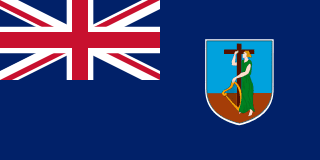
Discover
The identity of the nation
Montserrat is a small volcanic island in the Caribbean, a British territory nicknamed the “Emerald Isle” because of its green hills and the strong heritage of the Irish settlers who arrived there in the seventeenth century. With just over 4,000 inhabitants, it is one of the smallest nations in the world, but it carries a history marked by faith, loss and rebuilding.
The Christian faith is deeply woven into the life of the Montserratian people. Practically the entire population identifies as Christian, divided mainly between historic Protestant denominations, such as Anglican and Methodist, and the Catholic church, inherited from the first Irish colonizers. Sunday worship remains one of the high points of the week, gathering entire families in a small community where almost everyone knows one another by name.
Since 1995, when the Soufrière Hills volcano awoke from a long slumber, life on the island changed forever. The eruptions buried the former capital, Plymouth, under ash and mud and forced two thirds of the population to leave the island in search of refuge in other countries. To this day, the south of Montserrat remains off limits, an exclusion zone that daily reminds residents of the fragility of life and the need for a faith that sustains them through the crossing of loss.
Unlike so many other nations, Montserrat has no people group without access to the gospel: the Christian faith has already reached practically the whole island. The challenge now is different, keeping a personal and deep faith alive amid an inherited tradition, sustaining the church in a community that keeps shrinking because of migration, and caring for the heart of a people who are still processing the grief of all that was lost to the volcano.
Even though small in number, the church of Montserrat carries a testimony of perseverance that reaches beyond its borders: families scattered across the Caribbean, the United Kingdom and the United States carry with them the faith learned on the emerald isle, becoming a quiet bridge of hope wherever life takes them.
- Caribbean indigenous peoples, among them the Arawaks and later the Caribs, inhabit the island before the arrival of Europeans.
- 1493 Christopher Columbus sights the island and names it after the Spanish monastery of Montserrat.
- 1632 Irish Catholic settlers, coming from neighboring Saint Kitts, settle on the island and begin the strong local Irish heritage.
- 17th-18th century Sugar plantations expand through the forced labor of enslaved people brought from Africa.
- 1834 Abolition of slavery in the British colonies.
- 1871 The island joins the Federation of the Leeward Islands under British rule.
- 1995 The Soufrière Hills volcano, dormant for centuries, erupts and forces the gradual abandonment of the south of the island.
- 1997 A new eruption buries the historic capital, Plymouth, and kills 19 people; two thirds of the population leave the island.
- Today Montserrat rebuilds its life in the north of the island, with a strong Christian identity and a small, resilient community.
-
Englishofficial language, spoken by practically the entire population
-
Caribbean Creoleinformal form of English used in daily life, with Irish and African influence
Montserrat is a small volcanic island of just over 100 square kilometers in the Leeward Islands group, in the eastern Caribbean Sea. Its terrain is formed by three volcanic mountain ranges: the older Silver Hills to the north, the Centre Hills in the middle of the island, and the Soufrière Hills to the south, home to the still active volcano that changed the country's history. Because of the constant danger of new eruptions, the entire south of the island is an exclusion zone closed to the population, and almost all residents now live crowded into the narrow safe strip to the north.
Major cities
- BradesCurrent seat of government, in the safe north of the island
- Little BayCoastal village being built to become the future capital
- SalemOne of the largest settlements, with active commerce and community life
- Look OutThe island's most populous neighborhood
- St. John'sSmall settlement in the north of the island, with a few hundred residents
- PlymouthFormer capital, buried under volcanic ash, now within the exclusion zone and uninhabited
Climate and temperature
Goat water
A stew of goat meat with spices, the national dish, served at festivities and weddings.
Johnny cake
A fried flour dumpling, served at breakfast or as a side dish.
Salt fish with johnny cake
Salted cod sauteed with onion and tomato, served with the fried dumpling.
Sorrel
A drink made from sorrel hibiscus flowers, traditional at Christmastime throughout the Caribbean.
Festival
A lightly sweet, fried cornmeal dumpling, common at the island's popular festivities.
Ducana
A sweet dumpling of grated coconut and sweet potato, cooked in a banana leaf and served with salt fish.
Understand
Culture and spirituality
2a · The culture
Irish heritage
The island is called the "Emerald Isle" because of its first Irish settlers and is one of the only places outside Ireland where St. Patrick's Day is an official holiday.
Calypso and soca music
The strong, upbeat rhythm of calypso, a Caribbean musical style known for witty lyrics, is very much alive in the island's festivities.
Worship and community
Sunday worship is one of the small community's main social gathering points, as well as a spiritual one.
Memory of the volcano
Almost every family has a personal story tied to the loss of the former capital, which deeply shapes the collective identity.
Simple hospitality
Being small, the island has an unhurried pace of life and a culture of knowing people by name.
Ties to the diaspora
Families scattered across other Caribbean countries, the United Kingdom and the United States keep strong bonds with those who stayed.
- Entering the exclusion zone without permission The area around the Soufrière Hills volcano is dangerous and access is restricted by law.
- Treating the volcano disaster with cold curiosity For residents, the loss of the capital and the southern lands is still an open wound.
- Ignoring church customs Religious life is central to local culture; visiting a service calls for respect and discretion.
- Being overly impatient The pace of life is calm; impatience is seen as bad manners.
- Treating the island as irrelevant because of its size Despite its size, Montserrat has its own identity and history, worthy of respect.
- Refusing food or drink that is offered Accepting what is offered is a sign of respect for Caribbean hospitality.
2b · The field
Areas of spiritual battle and cultural captivity to cover in prayer. Tap each point to understand:
Many call themselves Christian by tradition and baptism, without a personal, living faith in day-to-day life.
The collective trauma of losing homes and the capital still weighs on entire families.
A large part of the people live outside the island, which weakens the local church and community life.
Obeah practices, folk magic of African origin, still survive on the margins of the Christian faith.
The economy relies heavily on British financial aid, which breeds discouragement and lack of initiative.
Historic denominations sometimes compete instead of working together.
Young people see little future on the island and seek life in other countries.
Longing for the former capital and the southern lands, now inaccessible, produces a grief that remains unresolved.
Contact with more secular lifestyles abroad weakens the faith of those who migrate or return.
Fear of new eruptions fuels a constant tension among residents.
In Montserrat, religious freedom is full and protected by law, as in the rest of the British Caribbean islands. There is no social or legal hostility toward Christians, who make up the overwhelming majority of the population.
The greatest challenge does not come from outside persecution, but from the risk of faith becoming merely an inherited tradition, without personal and transforming life. Historic churches, such as the Anglican, Methodist and Catholic, remain present, but face decline caused by the constant migration of families to other countries.
Remnants of popular spiritual practices, such as obeah (folk magic of African origin), still exist on the margins of the Christian faith in parts of the Caribbean, including Montserrat, a reminder that conversion of the heart is always a much bigger process than mere religious identification.
The persecution score runs from 0 to 100: the higher it is, the greater the pressure on Christians.
Montserrat has only two people groups considered in missionary research: the Montserratians, who make up the great majority of the population and are already a significantly reached people group, and a small British community, partially reached. There is no unreached people group on the island, since the church has been present since colonization and Christianity is the historic faith of nearly the entire population. The challenge here is not lack of access to the gospel, but deepening faith and forming committed disciples, amid the effects of the volcano and the ongoing migration that keeps shrinking the local church.
- 0 Unreached 0%
- 0 Minimally reached 0%
- 0 Superficially reached 0%
- 100 Partially reached 2,6%
- 4K Significantly reached 97,4%
- 0 Unreached 0%
- 0 Minimally reached 0%
- 0 Superficially reached 0%
- 1 Partially reached 50%
- 1 Significantly reached 50%
Source of people group data: Joshua Project (joshuaproject.net). Estimates, may vary.
Pray
Intercede for this nation
Every nation carries a redemptive purpose. Marks that seem woven into the identity God desires to restore:
Go
Practical details for those who want to go
Local time
Cost of living
Fixed at EC$2.70 per US dollar
Cost by city
Reference values (source: Numbeo). Confirm before traveling.
Practical points for those who go
- Plan ahead: the island is small, with few lodging and transportation options.
- Respect the exclusion zone: the southern area, near the volcano, is off limits for safety; never enter without authorization.
- Bring cash: cards are not always accepted outside the few commercial centers.
- Use the Eastern Caribbean dollar: the local currency (EC$) is the most practical form of payment.
- Protect yourself from the sun and sea: the tropical climate calls for sunscreen and constant hydration.
- Attend a local church service: it is a good way to get to know the community and its faith up close.
Send and sustain
Not everyone goes, everyone takes part
Not everyone goes. Everyone takes part.
Behind every worker among these peoples stands a network of people who pray without ceasing, care for the family left behind, and faithfully sustain the work. Sending is mission too.
Start with your church: introduce this nation, adopt it in ongoing prayer, and walk alongside those God is raising up to go.