Discover
The identity of the nation
The Isle of Man is a small land in the Irish Sea, between Great Britain and Ireland, with about 84 thousand inhabitants. It is not part of the United Kingdom or the European Union: it is a British Crown Dependency, with its own self-government and one of the oldest cultural identities in Europe, a blend of Celtic and Norse roots.
The island is home to the Tynwald, considered one of the oldest continuously running parliaments in the world, with origins in the Viking-era assemblies. Every fifth of July, the nation celebrates Tynwald Day, when the year’s laws are proclaimed outdoors on St John’s hill, a ritual that links the present to more than a thousand years of history.
Christianity arrived early. Manx tradition credits the island’s evangelization to missionaries linked to Saint Patrick, in the fifth century, and more than two hundred small ancient chapels, the keeills, still mark the landscape. Faith is embedded in the culture, and carved crosses, part Celtic, part runic, stand as testimony to a people who embraced the gospel many centuries ago.
Today the Isle of Man is Christian mostly in name, with a strong Anglican presence, in the historic Diocese of Sodor and Man, and Methodist. But, as in much of Western Europe, regular practice is declining and many people hold an inherited faith that is more cultural than living. The prosperity of the financial center coexists with a search for meaning and the spiritual cooling of younger generations.
It is a small, prosperous and peaceful nation, but one that needs to rediscover the vitality of the gospel that once shaped it. Praying for the Isle of Man means asking that inherited faith become living faith, and that the Manx language and culture, now undergoing a revival, also become vessels of worship to the God the ancient saints proclaimed.
- 5th century According to Manx tradition, missionaries linked to Saint Patrick bring Christianity to the island; the keeill chapels appear.
- 900 The island enters the Norse orbit; Gaelic-Scandinavian kings rule the Kingdom of Mann and the Isles, capitaled on St Patrick's Isle, in Peel.
- 979 Traditional date of the founding of the Tynwald, the assembly of Viking origin, today one of the oldest parliaments in the world.
- 1266 Under the Treaty of Perth, the kingdom passes from Norwegian to Scottish rule.
- 1765 The Revestment Act transfers feudal rights to the British Crown, ending the era of the Lords of Mann.
- 1866 The island gains democratic self-government as a Crown Dependency.
- 1907 The first Isle of Man TT race is held, which becomes a world-famous motorcycle racing event.
- 1974 Ned Maddrell, the last native speaker of Manx, dies; the effort to revive the language begins.
- Today A prosperous and self-governing nation, of nominal Christian majority, with a Celtic and Norse identity undergoing revival.
-
Englishofficial and the everyday language of nearly the entire population
-
Manx (Gaelg)native Celtic language, extinct as a mother tongue in 1974 and now undergoing revival, taught in schools
The Isle of Man lies in the Irish Sea, halfway between Great Britain, Ireland, Scotland and Wales. It measures about 53 km in length by 21 km in width, with varied terrain: plains in the north, central valleys and two mountainous areas. The highest point is Snaefell mountain, at 620 meters, from which, it is said, several kingdoms can be seen on a clear day.
Major cities
- DouglasCapital and largest city, administrative and financial center
- PeelFishing village to the west, with the historic castle on St Patrick's Isle
- CastletownFormer capital, with the medieval Castle Rushen
- RamseySecond largest, a port in the north of the island
- St John'sHome to Tynwald Hill, the stage for the national ceremony
Climate and temperature
Manx kippers
Herrings smoked over oak chips, a tradition on the island since the nineteenth century, served for breakfast.
Queenies
Small scallops from Manx waters, sauteed with bacon, garlic and cream; the island's national dish.
Seafood
Crab, queen scallop and mackerel caught in the Irish Sea, the base of local cuisine.
Bonnag
Flat, unleavened bread, lightly sweetened and studded with dried fruit, served in tea houses with Manx honey.
Understand
Culture and spirituality
2a · The culture
Celtic and Norse identity
The island unites Gaelic and Viking heritage, visible in the language, names and carved crosses.
The Tynwald
A source of national pride, the millennium-old parliament and the annual outdoor ceremony link the people to their history.
The Three Legs of Man
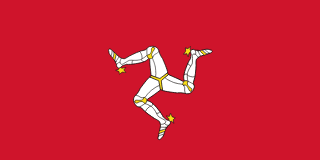
The three-legged triskelion is the island's symbol, with the motto "whichever way you throw it, it will stand".
Manx revival
After the death of the last native speaker, the language returned to schools and religious services.
The TT as a festival
The Isle of Man TT motorcycle race mobilizes the whole island and draws visitors from around the world.
Quiet, safe living
A small, close-knit community with low crime rates and a strong sense of belonging.
- Confusing the island with the United Kingdom The Manx have their own identity, government and language, and value that distinction.
- Belittling the Manx language Treating it as a dead curiosity offends those working for its revival.
- Reducing the island to a tax haven There is a millennium-old culture far greater than the financial center.
- Ignoring the weight of history The Tynwald, castles and crosses are not folklore, but a living part of identity.
- Excessive haste and informality Courtesy, discretion and respectful manners are valued.
2b · The field
Areas of spiritual battle and cultural captivity to cover in prayer. Tap each point to understand:
Many call themselves Christian out of tradition, without a personal, present experience of the gospel.
As in Western Europe, religious practice declines, especially among the young.
The wealth of the financial center can smother spiritual thirst.
Stability and well-being lead to a sense of not needing God.
Historic buildings with small, aging congregations.
Comfortable, private living weakens the sense of faith community.
Valuing the Christian past does not always translate into present faith.
Remnants of superstition and folklore coexist with the Christian heritage.
Smallness and remoteness can leave the church settled and inward looking.
The faith of the older generation struggles to reach the younger.
The Isle of Man is a place of broad religious freedom, and Christians live and worship without restrictions. Christianity is woven into public life: the Anglican Diocese of Sodor and Man is historic, and the Tynwald maintains ceremonial ties to the faith. There is no organized persecution or hostility toward believers.
The challenge here is not external pressure but internal cooling. As in much of Western Europe, inherited faith loses warmth, church attendance declines and new generations grow up increasingly distant from the gospel. The greater risk is not attack, but indifference and the loss of spiritual vitality in a nation once deeply Christian.
The persecution score runs from 0 to 100: the higher it is, the greater the pressure on Christians.
The Isle of Man is a small, culturally homogeneous nation, of nominal Christian majority and broad religious freedom. The challenge is not isolated or inaccessible peoples, but the cooling of inherited faith and the drift of new generations away from the living gospel, within an increasingly secular European context.
- 0 Unreached 0%
- 0 Minimally reached 0%
- 0 Superficially reached 0%
- 82K Partially reached 100%
- 0 Significantly reached 0%
- 0 Unreached 0%
- 0 Minimally reached 0%
- 0 Superficially reached 0%
- 2 Partially reached 100%
- 0 Significantly reached 0%
Source of people group data: Joshua Project (joshuaproject.net). Estimates, may vary.
Pray
Intercede for this nation
Every nation carries a redemptive purpose. Marks that seem woven into the identity God desires to restore:
Go
Practical details for those who want to go
Local time
Cost of living
comparable to or above the United Kingdom, with expensive food
Cost by city
Reference values (source: Numbeo). Confirm before traveling.
Practical points for those who go
- The currency is the Manx pound, at par with the pound sterling; British pounds circulate freely, but the Manx pound is not always accepted off the island.
- English is enough for everything; learning greetings in Manx is a much appreciated gesture of respect.
- The island is very safe and quiet, ideal for a discreet, relational presence.
- During the TT, in late May and early June, the island fills up and lodging becomes scarce and expensive.
- Value the local pace: small communities open up through trust and patient, ongoing relationship.
Send and sustain
Not everyone goes, everyone takes part
Not everyone goes. Everyone takes part.
Behind every worker among these peoples stands a network of people who pray without ceasing, care for the family left behind, and faithfully sustain the work. Sending is mission too.
Start with your church: introduce this nation, adopt it in ongoing prayer, and walk alongside those God is raising up to go.